Hundapoteket
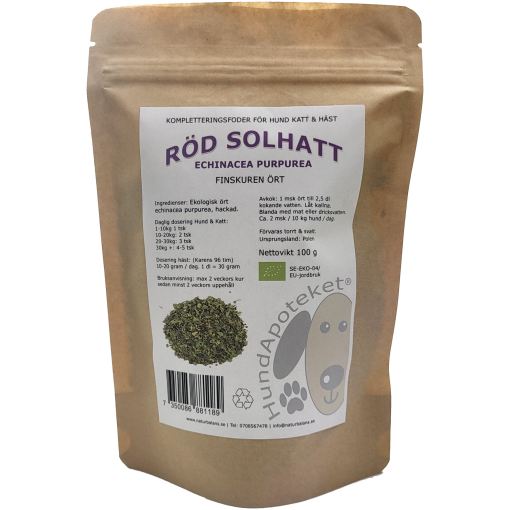
Red Coneflower, Echinacea (100g)
Red Coneflower, Echinacea (100g)
Couldn't load pickup availability
Echinacea purpurea is a bitter herb with a long tradition in plant-based animal care. Its energetics initially have a slightly warming effect, but with prolonged use—approximately two weeks or more—it is considered to have a cooling and drying effect on the body's tissues.
It is often recommended for individuals showing signs of "heat and dampness," where the body's elimination organs such as the liver, kidneys, and lymphatic system are not functioning optimally. This can manifest as itching, eczema, ear problems, watery eyes, loose stools, or recurring anal gland irritation. Many animals with this pattern worsen during warm periods and seek cool places.
In the short term, Echinacea purpurea is traditionally used to support elimination and circulation for temporary needs. It is always given as a decoction (infusion), which is the most gentle and effective preparation method for dogs and cats.
🦴Specifications
✅ Content: 100% organic Echinacea purpurea
✅ Form: Dried whole herb
✅ Usage: Decoction/tea to be mixed with food
✅ Net weight: 100 g
✅ Origin: Poland
Preparation - how to make a decoction (tea)
-
Mix 4 tablespoons of dried herb with 1 liter of almost boiling water.
-
Let steep for 20–60 minutes (can be left overnight for a stronger extract).
-
Strain the liquid and store in a glass or ceramic container.
-
Store in the refrigerator and use within 2 days.
Daily dosage (liquid)
- XS dog & cat (0–5 kg): approx. 30 ml
- Small dog (approx. 10 kg): approx. 60 ml
- Medium dog (approx. 20 kg): approx. 120 ml
- Large dog (30–40 kg): approx. 180–240 ml
- XL dog (45 kg+): approx. 360–480 ml
Mix the decoction into the dog's or cat's food. The daily amount can be divided over several meals.
NOTE! 14-day withdrawal period when using this herb.
📌 Important considerations
Echinacea purpurea is a natural feed supplement with no medicinal properties and should not replace veterinary care. Adjust the dosage to the animal's individual needs and introduce it slowly if the animal is sensitive. In case of suspected illness, a veterinarian should always be consulted.